NewFounding partner program now open for schools, seminaries and universitiesLearn more
About

Wisdom has a name.

Hokma, from the Hebrew word for wisdom (חכמה), is built on a simple conviction: information only matters when it becomes understanding.

Our mission

Turn information into understanding. Ground every answer. Cite every claim.

The story

Born in one of the oldest traditions of deep reading.

Hokma began in theological education, a field where texts are dense, sources matter, and a wrong citation is a serious error. We built a reading and learning engine rigorous enough for that world: a professionally digitized library, retrieval that always traces back to the page, and AI that is never allowed to invent.

Then we realized the same rigor is exactly what every learner needs: the medical student mastering anatomy, the lawyer parsing case law, the researcher synthesizing a hundred papers, the professional entering a new field.

So Hokma grew into a general-purpose learning platform, for every subject and discipline, carrying its founding standard with it: every answer grounded, every claim cited.
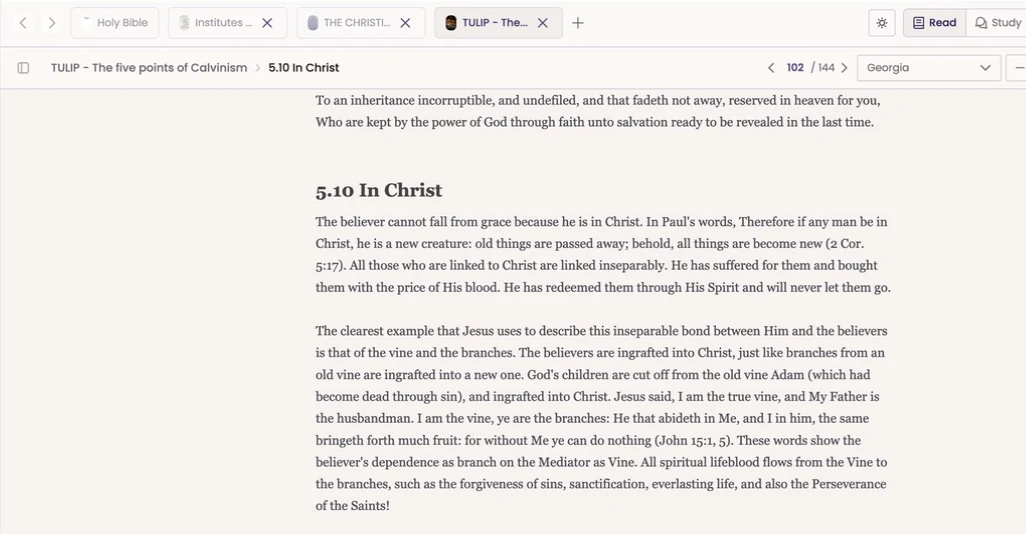
Hokma · Reader
The Hokma reader with several theology books open in tabs
The team

Built by people who build systems of record.

Hokma is built by Rappit. Our team brings 45+ years of ERP experience: software that organizations run on, where every figure has to reconcile and every record has to be traceable.

We bring that same discipline to learning. An answer in Hokma is treated like a ledger entry: it has to point back to where it came from.

45+

Years of ERP experience

Enterprise software delivered for organizations where accuracy is not optional.

Traceable by design

Every answer cites its book and page, the way every entry in a good system can be audited.

What we believe

Four principles we won't trade away.

01

Grounded, not generated

Answers should be retrieved from real, vetted sources and shown with their citations, never fabricated.

02

Augment, don't replace

AI should sharpen your thinking, not substitute for it. Hokma helps you make connections faster while you stay in control.

03

The learner holds the reins

You decide which sources inform every answer: one book, your own documents, or a whole library.

04

Reading should be active

Understanding comes from questioning, testing, and connecting, so Hokma turns every page into a place where that can happen.

The technology, in plain words

A team of specialists, led by one supervisor.

Under the hood, Hokma runs an agentic AI architecture on Google Cloud. Think of it as a research team: when you ask a question, a learning supervisor coordinates specialist agents. One retrieves the most relevant passages, others summarize, translate, build quizzes, or produce audio, and the supervisor assembles their work into one grounded, cited answer.

Guardrails and expert evaluation keep every response reliable. Today Hokma retrieves across hundreds of volumes in under a second, and it's architected to scale into the tens of thousands.

Step by step

What happens when you ask.

The whole journey takes under a second.

Ingest

Every book is professionally digitized and checked; every upload is read, transcribed, and indexed by meaning, not just keywords.

Plant Physiology.pdf · indexed by meaning

You ask

A question, a highlighted passage, or “compare these three chapters.” You choose which sources are in play.

“Explain photosynthesis simply”

Retrieve

Hokma searches your allowed sources semantically and pulls the exact passages that bear on your question.

p. 87 · p. 88 · lecture notes, week 3

Ground

The answer is composed only from those passages. If the sources don't contain an answer, Hokma says so.

Answer built from 3 passages

Cite

Every claim carries a numbered citation that links back to its book and page, so verification is one click away.

[1] [2] [3] · each one clickable
One level deeper

From the scanned page to the cited answer.

The same journey in a little more detail, still in plain words.

Before you ask

Preparing every book

  1. Scan and read. Each page is scanned and run through text recognition (OCR), so every word can be searched and quoted.
  2. Check the details. Metadata checks confirm each book's details, so citations point to the right book and page.
  3. Divide into passages. The text is split into passages (chunking) small enough to retrieve precisely.
  4. Map the meaning. Each passage gets an embedding, a numeric fingerprint of what it means, so it can be found by meaning rather than by matching keywords.
  5. Index it. The embeddings go into a vector index, ready to search whenever you ask.

Your own PDF uploads, up to 400 MB, are read and indexed the same way.

When you ask

Building the answer

  1. Retrieve. Your question is matched by meaning against the passages in the sources you allowed.
  2. Rank. The matches are ranked so the most relevant passages lead.
  3. Ground. The answer is built only from those passages. If they don't hold an answer, Hokma says so.
  4. Summarize. The passages are drawn together into one clear answer.
  5. Cite. Every claim names its book and page, and the answer suggests related concepts to explore next in the knowledge graph.

For the technically curious: retrieval-augmented generation (RAG) with OCR-validated ingestion, vector search, and a multi-agent orchestration layer, built with Python, Angular, LangGraph, Vertex AI Gemini, Cloud Run, and Firestore.

Early access

Learn with us from day one.

Hokma is launching soon. Join the waitlist, or bring it to your whole institution.

Tell us a little about yourselfTakes about 20 seconds

We use these details only to plan your access and invitations. See our privacy policy.

You're on the list.

We'll email your invitation as soon as your spot opens, in order of signup.

Talk to us about your institution →
Free to joinNo spam, unsubscribe anytimeInstitutions can join earlier